
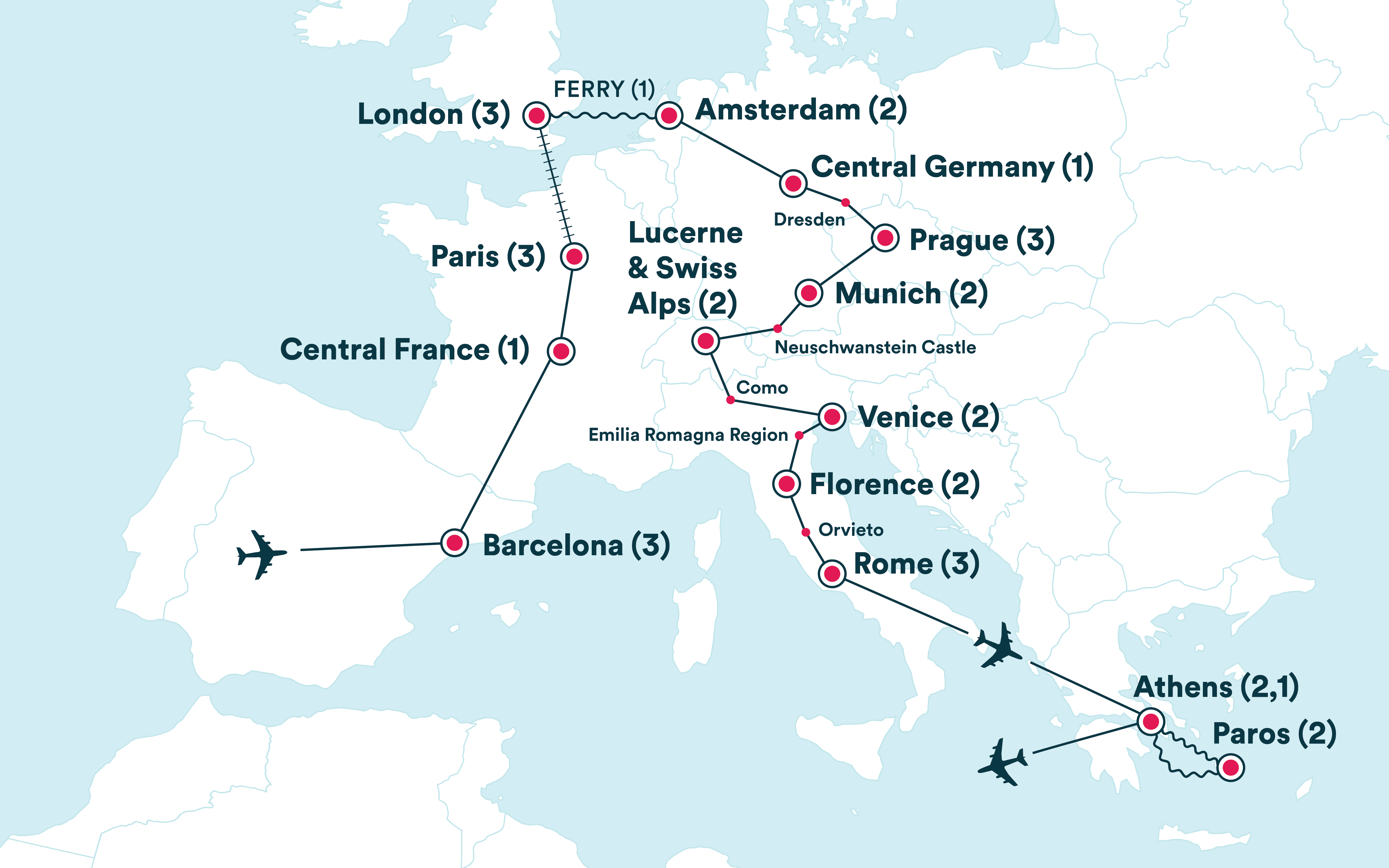
A multi-city international trip can look perfect on a map and still feel exhausting in real life. Three countries, six cities and a long list of famous landmarks may seem like a smart way to maximize limited vacation time, but every hotel change, train connection and airport transfer takes more time than the timetable suggests. The goal is not to visit as few places as possible. It is to build a route where every move earns its place.
A two-hour train ride can easily consume half a day once you include checkout, transport to the station, boarding, arrival, luggage storage and the trip to the next hotel. A short flight can take even longer door to door. When those hidden hours are ignored, the itinerary becomes a sequence of transfers rather than a vacation.
This guide explains how to plan a multi-city international trip without overpacking the itinerary. It covers route design, realistic pacing, accommodation, transport, luggage, budgets, buffer time and departure protection. If rail is central to your route, TourLix’s guide to rail-friendly countries is a useful companion.
Start With the Purpose of the Trip
Before choosing cities, decide what you want the trip to feel like. A food-focused vacation, a first visit to Europe, a museum-heavy cultural route, a family holiday and an outdoor adventure all need different pacing. A route that works for an energetic solo traveler may be frustrating for a family with children or anyone who dislikes frequent hotel changes.
Ask four questions before opening a booking site
- Which three experiences would I be disappointed to miss?
- Do I genuinely enjoy changing hotels every few days?
- How much early-morning travel and walking can I comfortably handle?
- Do I want depth in fewer places or variety across more places?
If depth matters most, reduce the number of bases. If variety matters, keep transfers direct and geographically logical. This one decision prevents many overloaded itineraries.
Count Usable Days, Not Calendar Days
A ten-day trip rarely provides ten full sightseeing days. International arrival day is often partial, departure day may be almost unusable, and every transfer between hotels removes another block of time. Count the hours you can realistically use rather than the dates printed on the flight confirmation.
A practical minimum-night framework
| Stop type | Useful starting point | Why |
|---|---|---|
| Large capital or major city | 3 nights | Usually provides two meaningful full days |
| Smaller city | 2 nights | Gives one full day without immediate repacking |
| Nature or resort base | 3–4 nights | Creates weather and activity flexibility |
| Transit stop | 1 night only when useful | Can break a long route or protect a flight |
These are guidelines, not rules. The point is to expose plans that look exciting but provide almost no uninterrupted time in any destination.
Build the Route by Geography
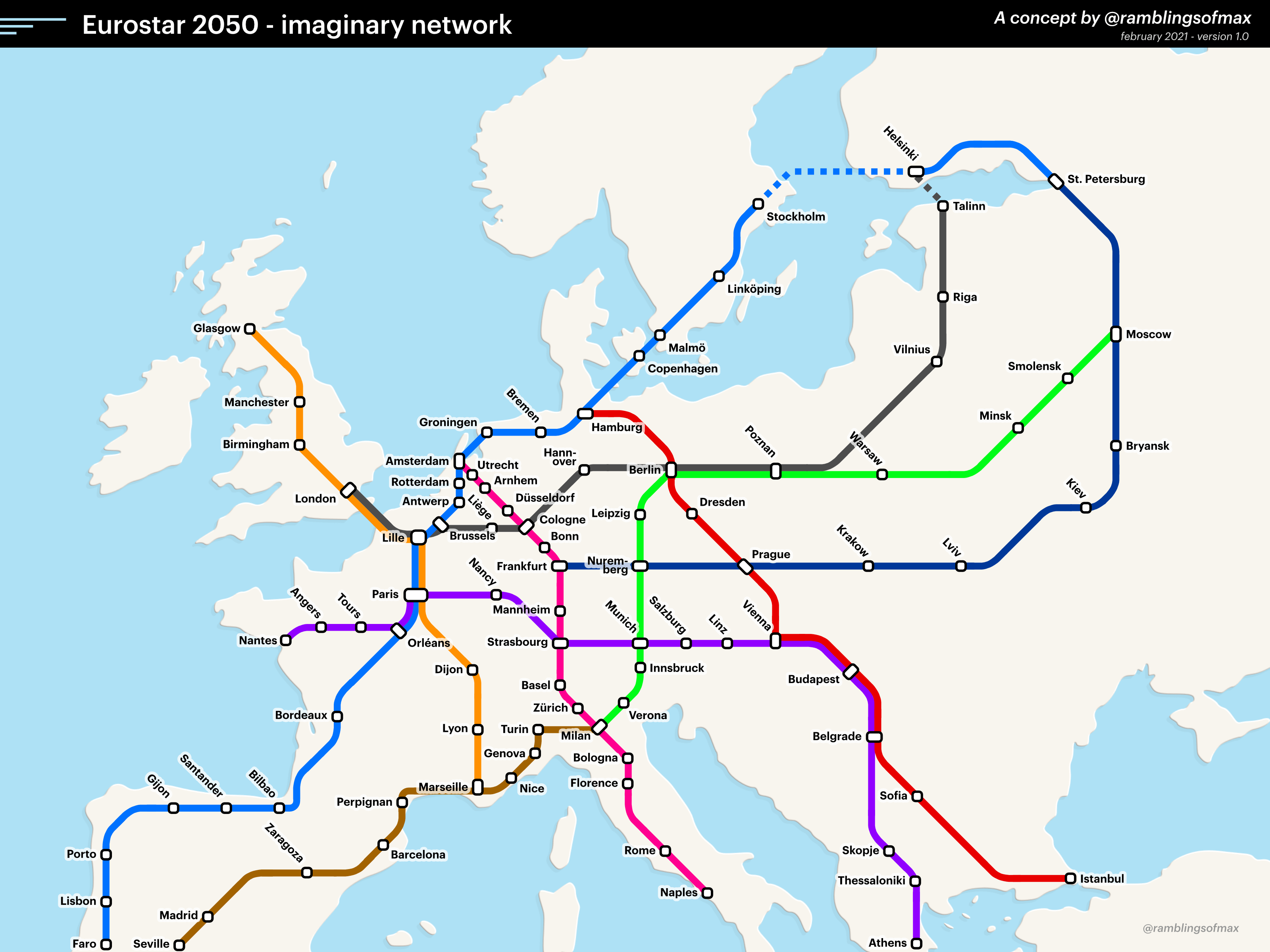
The cleanest multi-city itineraries move in one general direction instead of zigzagging. Amsterdam–Brussels–Paris, for example, is easier to understand than repeatedly backtracking between the same regions. Plot every proposed stop on a map before booking anything nonrefundable.
Consider an open-jaw flight
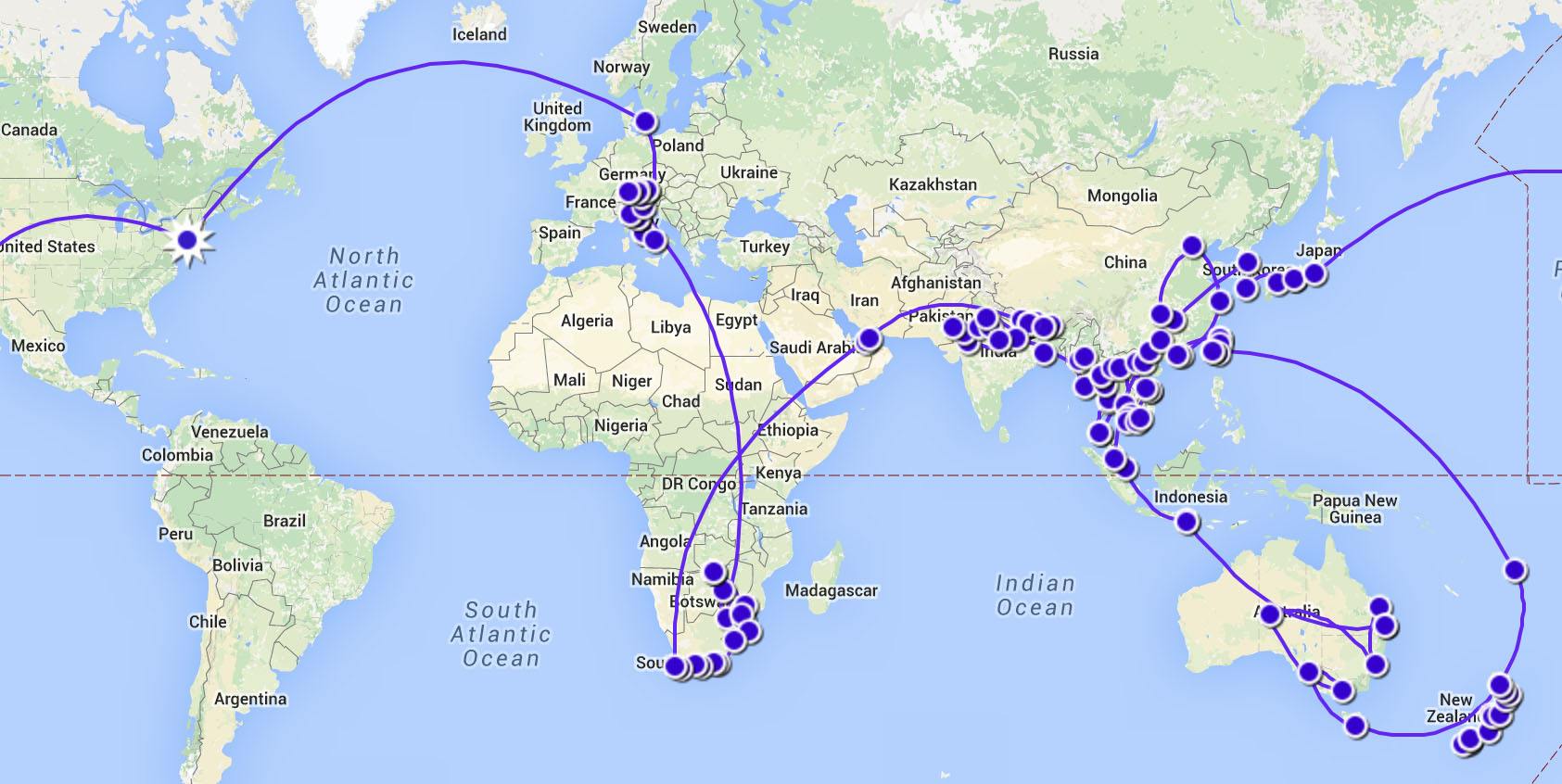
An open-jaw itinerary arrives in one city and departs from another. It can remove the need to return to your starting point on the final day. Compare the full cost rather than airfare alone: a slightly more expensive open-jaw ticket may save a train journey, an extra hotel night and several valuable vacation hours.
Compare Transport Door to Door
Do not compare a 90-minute flight with a three-hour train by looking only at time in the air or on the rails. Add every step from the first hotel door to the next hotel door.
Door-to-door checklist
- Hotel to airport, station or terminal.
- Recommended arrival time before departure.
- Security, immigration or boarding procedures.
- Actual journey time.
- Arrival procedures and baggage collection.
- Transfer from the arrival station or airport to the hotel.
- Check-in or luggage-storage time.
On many medium-distance routes, a city-center train can be easier even when the ticket costs more. On longer routes, flying may save meaningful time. Choose the option that simplifies the whole travel day.
Treat Transfer Days as Real Travel Days
A transfer day can still be enjoyable, but it should not be expected to perform like a full sightseeing day. A useful formula is “travel plus one light activity.” After arriving, choose a neighborhood walk, local market, relaxed meal or nearby viewpoint instead of booking a major timed attraction immediately.
Example
Take a morning train from Vienna to Salzburg, leave luggage at the hotel, have lunch and spend the afternoon walking the old center. Save the major fortress, museum or mountain excursion for the next morning. This keeps small delays from ruining a prepaid plan.
Protect Arrival Day From Overplanning
International flights can be delayed, immigration may take longer than expected and jet lag affects people differently. Avoid nonrefundable tours soon after landing. A better arrival day includes hotel check-in, a proper meal, a short neighborhood walk, essential shopping and an early adjustment to local time.
If long-haul travel is part of the route, TourLix’s guide on handling jet lag and long-haul travel provides additional practical planning ideas.
Use Fewer Hotels When Day Trips Work
Good transport networks often make it unnecessary to change hotels for every destination. If a nearby city is connected by a direct one- or two-hour train and you do not need an early start or late finish there, a day trip may be easier than another checkout and check-in.
A day trip is especially useful when
- Your current hotel has a convenient station connection.
- The destination is easy to explore from one main arrival point.
- You value a stable sleep routine.
- You are traveling with children or larger luggage.
- You can return frequently enough that a missed train is not a crisis.
For slower European planning, see TourLix’s small European cities guide.
Choose Accommodation That Reduces Friction
Hotel location matters more on a multi-city route because a poor location creates extra work every time you move. The cheapest room may not be the best value if it requires a long taxi ride to the station or makes late arrivals difficult.
Prioritize these features
- Simple access to the main station or airport connection.
- Luggage storage before check-in and after checkout.
- Reliable late check-in if the route arrives in the evening.
- Restaurants, groceries and pharmacies nearby.
- Elevator access when stairs would be difficult with luggage.
- Recent reviews that mention transport and neighborhood convenience.

TourLix’s hotel neighborhood guide explains how to compare transport, walkability and practical access before booking.
Pack for Movement, Not Just Weather
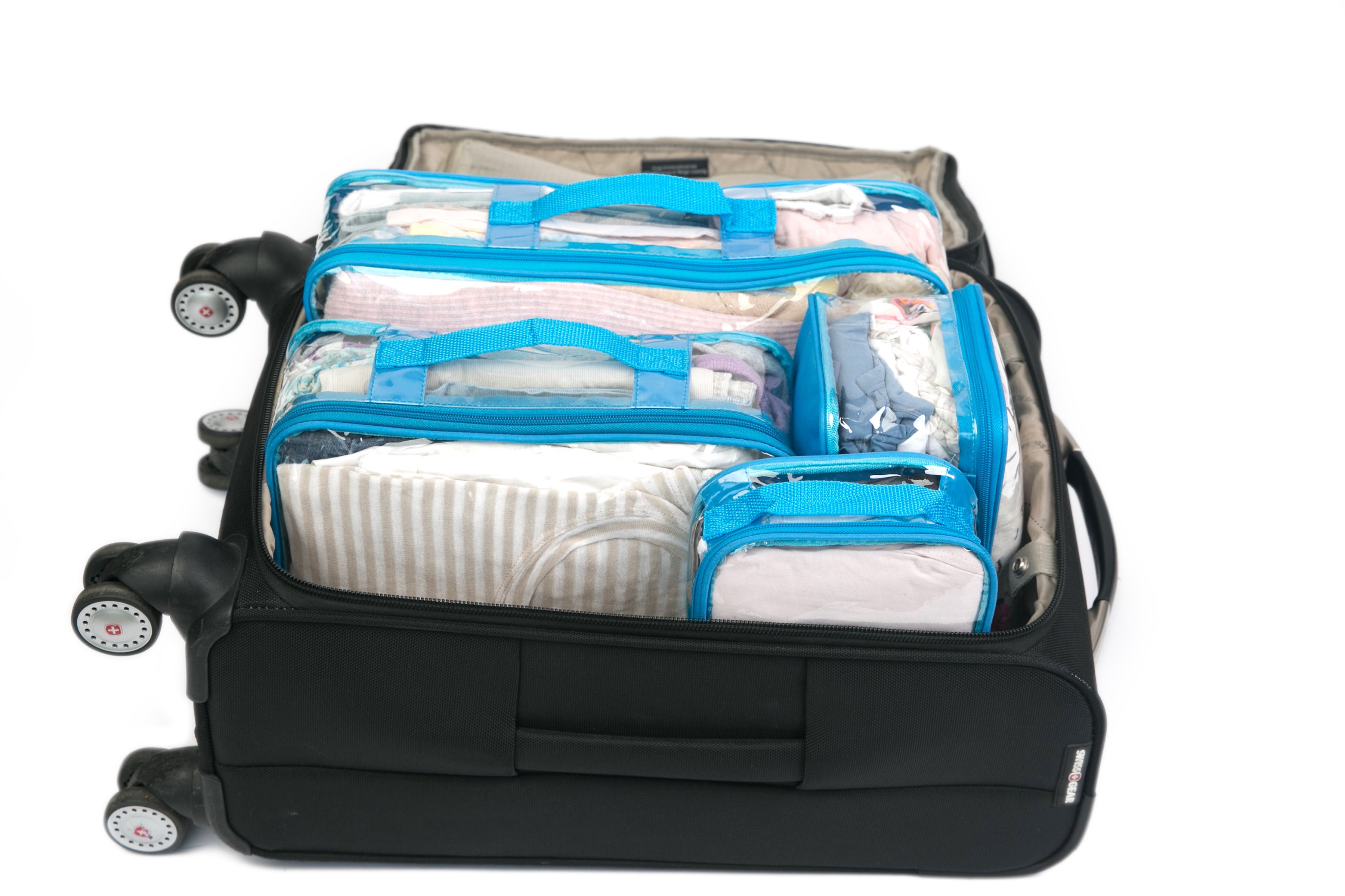
A suitcase that is comfortable for a one-hotel resort stay can become exhausting across stations, stairs and cobblestones. Multi-city travel rewards lighter luggage because you handle it repeatedly.

Use a simple packing system
- One main bag you can lift and control yourself.
- One smaller personal bag for documents, medicines and electronics.
- Mix-and-match clothing instead of separate outfits for every day.
- A laundry plan for longer trips.
- Only specialty items tied to confirmed activities.
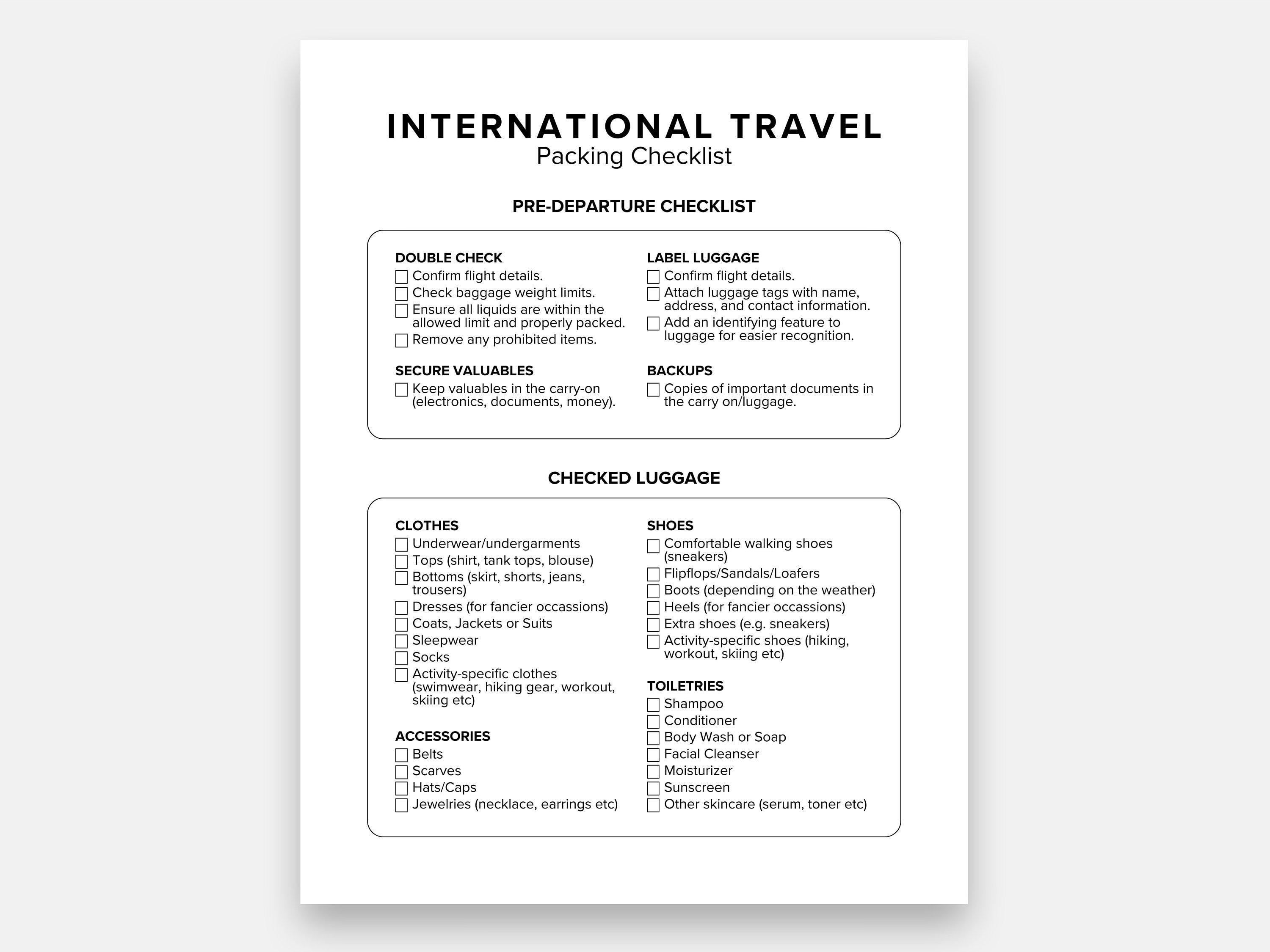
The TourLix carry-on packing guide provides a more detailed system for seven- to ten-day trips.
Use Geographic Clusters Inside Each City
Overpacking can happen within a destination as well as between destinations. Put your planned attractions on a map and group nearby museums, markets, parks and restaurants. Four stops in one neighborhood may feel easier than two attractions on opposite sides of a large city.
Use one anchor booking per day
If a museum, tour or attraction requires a timed reservation, make it the day’s anchor and keep the surrounding activities flexible. A 2 p.m. museum ticket can be paired with a nearby morning walk and an unreserved dinner. When every hour is fixed, one delay can disrupt the whole day.
Include Deliberate Buffer Time
Unscheduled time is not wasted time. It protects the itinerary from rain, transport delays, fatigue, laundry, shopping or a place you unexpectedly want to revisit. On a one-week trip, a few open hours may be enough. On a two-week multi-city route, at least one half-day buffer can be extremely useful.
Budget for Moving Days
Transfer days create costs that are easy to forget: station food, luggage lockers, seat reservations, airport trains, local buses, taxi surcharges and last-minute meals. Add a separate mobility category rather than counting only the headline intercity ticket.
Include these costs
- Intercity fare.
- Seat or sleeper reservation.
- Transport at both ends.
- Luggage storage.
- Food during transit.
- A small emergency rebooking reserve.
For a complete system, use TourLix’s realistic travel budget guide.
Protect Important Connections
A sightseeing delay is inconvenient. Missing a separate international flight or cruise can be expensive. Avoid placing a long train journey or independently ticketed flight immediately before a major departure unless the buffer is generous.
Safer final-day strategy
Spend the final night in the departure city or somewhere with a simple, reliable connection. If you choose a same-day transfer, use the operator’s current schedule and build in more time than the minimum connection.
Within the European Union, the European Commission’s rail passenger-rights information explains protections that may apply to delays and missed connections. Rights vary with the journey and ticket, so treat them as protection rather than an itinerary strategy.
Sample 12-Night Multi-City Framework
| Nights | Plan | Purpose |
|---|---|---|
| 1–4 | Major arrival city | Recover and explore without rushing |
| 5–7 | Second city by direct rail or flight | Two useful full days |
| 8–10 | Smaller city or nature base | Different pace with buffer time |
| 11–12 | Final departure city | Protect the international journey home |
This framework creates three meaningful bases plus a protected final departure. It can be adjusted for longer stays, but the principle remains the same: fewer transfers usually produce more usable travel time.
Multi-City Planning Checklist
- Identify the three experiences that matter most.
- Count usable full days rather than calendar dates.
- Limit unnecessary one-night stops.
- Build the route in one direction when possible.
- Compare rail and flights door to door.
- Choose station- or transit-friendly accommodation.
- Keep luggage manageable.
- Use one anchor reservation per day.
- Add buffer time.
- Protect the final international departure.
- Save tickets, hotel details and essential documents offline.
Frequently Asked Questions
How many cities are reasonable in two weeks?
For many travelers, three to five bases is comfortable depending on distance and transport quality. More can work when connections are short and frequent hotel changes are genuinely enjoyable for you.
Are one-night stops always a mistake?
No. They can make sense as a transit break, for a specific event or to protect an important departure. The problem is when most of the trip consists of one-night stays.
Should every train or flight be booked in advance?
It depends on the country, season and service. High-speed or international trains and popular flights may reward advance booking, while regional transport can be more flexible. Check the operator’s current rules.
How much free time should I keep?
At minimum, leave a few unstructured hours every couple of days. Longer trips benefit from a half-day or even a full day that can absorb weather, tiredness or changed plans.
Is rail always better than flying between cities?
No. Rail is often excellent when stations are central and the distance is moderate, but flights can be more practical on long routes. Compare total travel time, cost, luggage rules and the location of both terminals.
Actionable Conclusion
A successful multi-city international trip is not measured by the number of destinations listed in the itinerary. It is measured by how much of the journey you can actually enjoy. Build the route around your priorities, count the hidden time in every transfer, choose convenient accommodation and keep enough flexibility for real travel conditions.
Start with the experiences you care about most, then remove any stop that exists only because it looks close on the map. A slightly shorter itinerary often creates better meals, better sleep, fewer stressful connections and stronger memories. The plan may look less ambitious on paper, but it will usually feel much richer once you are actually traveling.





2 Comments